Pet Dental Care: The Guide Most Owners Skip (Dogs & Cats, 2026)
Here’s a statistic that should be famous: by age three, most dogs and cats already have some form of dental disease. It’s the most common medical condition vets see — and one of the most invisible to owners, because pets with aching mouths keep eating, keep playing, and keep quiet.
The result: “doggy breath” gets treated as a personality trait while gum disease quietly does damage — and untreated periodontal disease doesn’t stay in the mouth; the chronic inflammation and bacteria are linked to heart, kidney, and liver problems. Here’s the honest guide — what works, what’s marketing, and what a realistic dental routine looks like.
The Warning Signs Owners Rationalize Away
- Bad breath. Healthy pet mouths don’t smell foul. Persistent stink is bacteria, full stop.
- Yellow-brown crust on teeth — tartar, especially along the gumline and back molars.
- Red or bleeding gumline — gingivitis, the last reversible stage.
- Eating differently: chewing on one side, dropping kibble, swallowing without chewing, going slow on hard food.
- Pawing at the mouth, drooling more than usual, blood spots on toys.
- In cats: skipping meals then hovering over the bowl hungry — classic tooth-pain behavior, often from resorptive lesions, painful cavities-like erosions that affect a large share of adult cats.
A pet showing several of these isn’t “getting older.” It has a treatable, likely painful mouth condition — book the vet. These are also exactly the small behavior shifts a daily pet diary surfaces weeks before they’re obvious.
Brushing: The Gold Standard Nobody Does
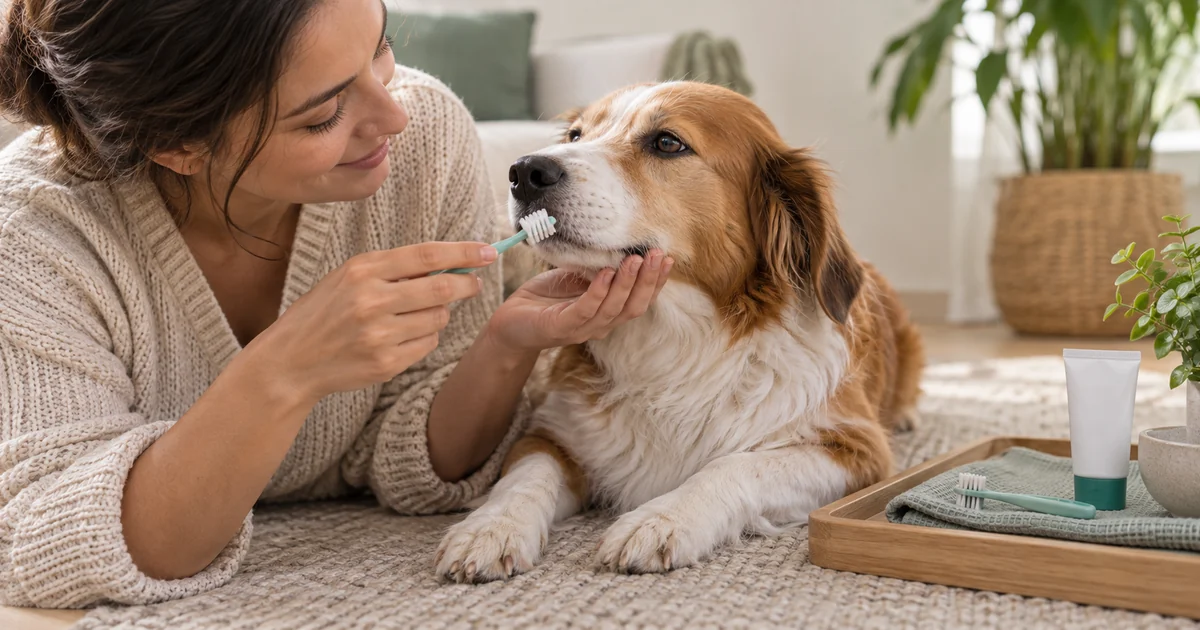
Daily brushing is to pet dental care what the seatbelt is to car safety — unglamorous, proven, and skipped by a remarkable number of people. Done consistently, it’s the single most effective thing you can do at home.
The barrier is almost never the pet; it’s the introduction. Rush it and you create a lifelong wrestling match; take two or three weeks of gradual steps (see the how-to above) and most dogs — and a respectable number of cats — accept it as routine.
Two hard rules:
- Pet toothpaste only. Human toothpaste contains fluoride and often xylitol, which is severely toxic to dogs. Enzymatic pet pastes work even where brushing is imperfect.
- Consistency over perfection. 30 seconds per side, 3+ days a week, beats a heroic five-minute session once a month. This is a streak habit — treat it like one.
Beyond the Brush: What’s Worth It
Ranked honestly:
| Option | Verdict |
|---|---|
| VOHC-accepted chews & diets | The real second line. The Veterinary Oral Health Council seal means proven plaque/tartar reduction — look for it specifically |
| Dental diets | Kibble engineered to scrub as it’s chewed; genuinely useful for cats who refuse brushing |
| Water additives & gels | Modest supporting evidence; fine as a supplement, not a substitute |
| Raw bones | Controversial: cleaning effect exists, but so do slab fractures and GI risk — vet-dependent, never cooked bones |
| ”No anesthesia” cosmetic scaling | Avoid. Scrapes visible tartar while disease continues below the gumline — cosmetic, stressful, and falsely reassuring |
Professional Cleanings: What You’re Actually Paying For
A proper veterinary dental (COHAT — comprehensive oral health assessment and treatment) happens under anesthesia because the disease lives under the gumline where no awake animal allows work:
- Full-mouth exam and probing of every tooth
- Dental X-rays — up to 60% of each tooth is invisible above the gum, and X-rays routinely find hidden abscesses and root damage in “fine-looking” mouths
- Ultrasonic scaling above and below the gumline, then polishing
- Extractions of unsalvageable teeth (pets do great even with multiple extractions — a painful tooth removed is quality of life added)
How often depends on breed, size, and home care: small breeds and brachycephalic dogs (crowded mouths) often need annual cleanings; large dogs with brushed teeth may go much longer. Anesthesia costs money and worries owners — modern protocols with pre-op bloodwork make it low-risk for the vast majority — but the honest comparison is against the cost of the neglected version: extractions, abscesses, and years of silent pain.
Log every cleaning, extraction, and dental note in your pet’s medical records — dental history is exactly the kind of detail that gets lost between clinics and matters years later.
The Realistic Routine
- Daily-ish: brush (60 seconds), or dental diet/chew on non-brushing days
- Weekly: lift the lip, look at the gumline, sniff the breath — log anything new
- Annually: vet dental grading at the checkup; professional cleaning when advised, not when it’s an emergency
Dental disease is the most preventable major condition in pets. The prevention just has to actually happen — which makes it a habit-tracking problem as much as a medical one.
Download PokiPaw to build the brushing streak, log dental products and cleanings, and keep your pet’s complete dental history one tap from any vet who asks.
