Pet First Aid Kit and Emergency Plan: 27 Essentials for 2026
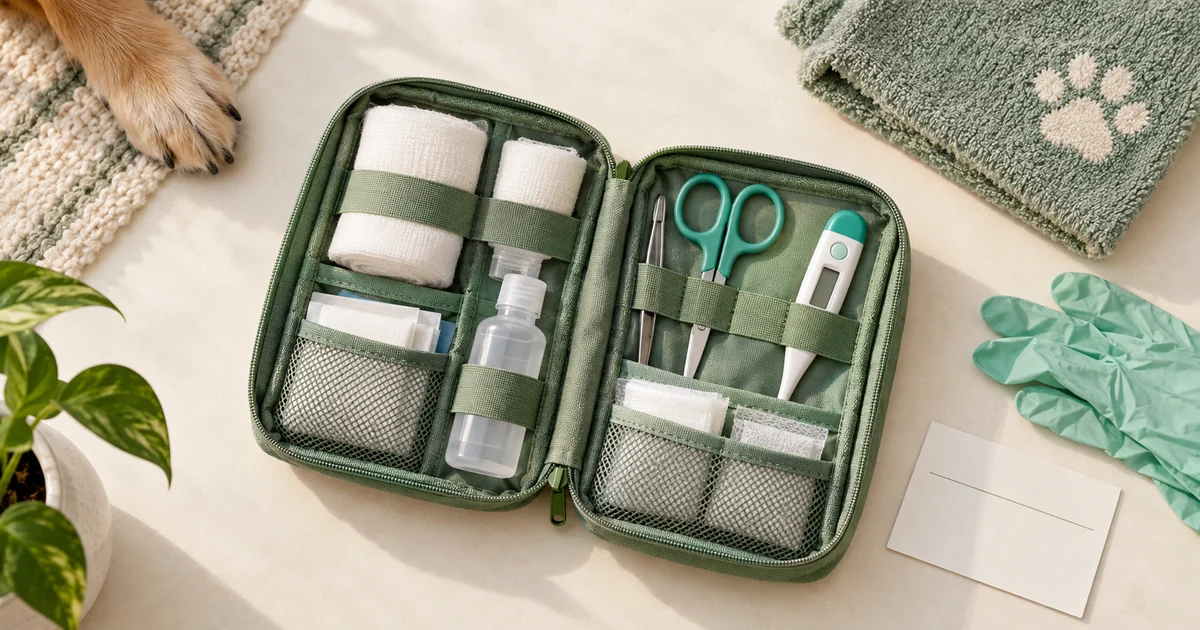
Most pet emergencies don’t happen at the vet’s office. They happen on a Sunday afternoon hike, at midnight in your living room, or on the side of a road during a road trip. The difference between a manageable scare and a tragedy is often the 90 seconds it takes you to reach a properly stocked first aid kit.
This guide breaks down exactly what belongs inside a pet first aid kit in 2026, why each item matters, and how to keep the whole system actually usable when stress is high.
Why a Pet-Specific Kit (Not a Human One)
A standard household first aid kit is built for human anatomy. It assumes a patient who can describe pain, hold still, and swallow a pill on command. None of that applies to a frightened dog or cat. A pet first aid kit needs blunt-tip scissors (to cut around fur), a muzzle or soft cloth (because even gentle pets bite when in pain), and items that are safe for animal physiology — for example, you should never give a dog ibuprofen or acetaminophen.
Building a dedicated kit keeps your supplies organized, safe, and ready.
The Complete Pet First Aid Kit Checklist
Wound Care (8 items)
- Sterile gauze pads (3x3 and 4x4 inch) — for direct pressure on bleeding wounds.
- Self-adhering bandage wrap (Vetrap or equivalent) — sticks to itself, not to fur.
- Non-stick wound pads — for burns or abrasions where gauze would tear off.
- Adhesive medical tape — to secure dressings.
- Blunt-tip scissors — to safely trim fur around a wound.
- Fine-point tweezers — for ticks, splinters, and small foreign objects.
- Saline solution (sterile, sealed) — to flush eyes and clean wounds.
- Antiseptic wipes or chlorhexidine solution — pet-safe wound disinfection. Avoid alcohol.
Medications and Dosing (6 items)
- Hydrogen peroxide 3 percent — only to induce vomiting if instructed by a vet or poison control. Never use on wounds.
- Styptic powder (or cornstarch) — stops bleeding from torn nails fast.
- Activated charcoal — for certain poisonings, only when directed by a professional.
- Oral dosing syringes (1 mL, 5 mL, 10 mL) — for liquids and pill paste.
- Current prescription medications — at least a 2-week supply if your pet is on long-term meds.
- Printed dose chart — exact dosing for any medication in the kit, written in mL or mg, not “spoonfuls.”
Restraint and Handling (4 items)
- Soft muzzle or roll of gauze — even gentle pets bite when in pain. A 2-meter strip of gauze can make an emergency muzzle.
- Slip leash — to control your pet during transport.
- Towel or small blanket — for warmth, restraint, or as a stretcher.
- Disposable gloves — to protect both you and the wound.
Diagnostics (3 items)
- Digital rectal thermometer — normal dog/cat temperature is 38.0–39.2 °C (100.5–102.5 °F). Anything above 39.5 °C is veterinary urgent.
- Penlight or small LED torch — to check pupils, gums, throat, or wounds at night.
- Lubricant (water-based) — for the thermometer.
Records and Communication (3 items)
- Printed emergency contact card with: regular vet, after-hours vet, ASPCA Poison Control (888-426-4435 in the U.S.) or your country’s pet poison hotline, microchip registry login.
- Current vaccination summary — boarding facilities and emergency clinics often ask for this on intake.
- A recent photo of your pet — printed, in case you become separated.
Comfort and Logistics (3 items)
- Bottled water (small) — for flushing, cleaning, or drinking on a long ER drive.
- Collapsible bowl — for water on the go.
- A pen and small notebook — to log time of incident, symptoms, and any medication given (the ER vet will ask).
Where to Keep Your Kit (Hint: Not in a Closet)
A first aid kit is only useful if you can reach it in under 60 seconds. We recommend a multi-location setup:
- Primary kit — in a kitchen cabinet, mudroom, or wherever you keep the leash.
- Car kit — a smaller duplicate in your vehicle. Most off-leash injuries happen on outings, not at home.
- Travel kit — a compact version for hotel stays and trips.
Each kit should be labeled and dated with the next 6-month refresh.
Pet First Aid You Can Do — And What You Can’t
A first aid kit treats the first 10 minutes. It does not replace a vet. Use it to:
- Apply pressure to stop bleeding
- Flush eyes or wounds with saline
- Stabilize a fracture with a rolled towel before transport
- Take a temperature and gum-color reading the ER vet will ask about
- Give a prescribed dose of an existing medication
Do not use it to:
- Diagnose serious internal injuries
- “Wait and see” with poisoning, bloat, trauma, or seizures
- Give human medications (ibuprofen, acetaminophen, aspirin, etc.) without veterinary direction
When in doubt, transport. For a full breakdown of which emergencies require immediate ER care, see our pet emergency preparedness guide.
Know Your Emergency Numbers
Save these in your phone right now:
| Contact | When to Call |
|---|---|
| Your regular vet | First call for any health concern during hours |
| Emergency/after-hours vet clinic | After hours, weekends, holidays |
| ASPCA Animal Poison Control | 888-426-4435 (US) — if your pet ingests something toxic |
| Pet Poison Helpline | 855-764-7661 (US/Canada) — toxin exposure |
| Local animal control | Lost pet, stray animal situations |
PokiPaw’s Emergency screen gives you one-tap access to nearby vets via GPS, poison control contacts, and your pet’s critical health data — allergies, current medications, and conditions.
The 5 Most Common Pet Emergencies
1. Poisoning / Toxic Ingestion
Common toxins:
- Chocolate (especially dark/baking chocolate)
- Xylitol (sugar-free gum, some peanut butters)
- Grapes and raisins
- Onions and garlic
- Lilies (highly toxic to cats — even pollen)
- Rat poison
- Antifreeze
- Human medications (ibuprofen, acetaminophen, antidepressants)
What to do:
- Don’t panic. Note what they ate, how much, and when.
- Call poison control or your vet immediately.
- Do NOT induce vomiting unless specifically told to by a professional.
- Bring the packaging of whatever they ate to the vet.
2. Hit by Car / Trauma
What to do:
- Approach carefully — injured animals may bite out of pain.
- Muzzle if necessary (a strip of gauze works in a pinch — never muzzle a vomiting animal).
- Move onto a flat surface (board, blanket) if spinal injury is possible.
- Apply gentle pressure to bleeding wounds with gauze.
- Go to the emergency vet immediately.
3. Bloat (GDV — Gastric Dilatation-Volvulus)
Primarily affects large, deep-chested dogs (Great Danes, German Shepherds, Standard Poodles). This is a life-threatening emergency.
Signs: Distended abdomen, unproductive retching, restlessness, drooling, rapid breathing.
What to do: Go to the emergency vet immediately. Do not wait. GDV can kill within hours without surgery.
4. Seizures
What to do:
- Stay calm. Clear the area of objects that could hurt your pet.
- Do NOT put your hands near their mouth.
- Time the seizure — if it lasts more than 3 minutes, go to emergency vet.
- After the seizure, keep the environment quiet and dark.
- Call your vet to report the episode.
Log seizure details (time, duration, behavior before/after) in your pet’s health records. This data is critical for your vet to determine if medication is needed.
5. Heatstroke
Signs: Excessive panting, drooling, bright red tongue, vomiting, staggering, collapse.
What to do:
- Move to shade/air conditioning immediately.
- Apply cool (not cold) water to their body, especially paws and ears.
- Offer small amounts of water.
- Go to the vet even if they seem to recover — organ damage can be delayed.
Prevention: Never leave a pet in a parked car. Even at 70°F outside, car interior can reach 104°F in 30 minutes.
Natural Disaster Preparedness
Before Disaster Season
- Identify pet-friendly evacuation shelters and hotels in your area
- Keep your pet’s emergency kit by the door
- Make sure microchip information is current
- Have a recent photo saved on your phone
- Know your evacuation route
- Identify a trusted neighbor who could evacuate your pet if you’re not home
During Evacuation
- Never leave pets behind
- Keep dogs leashed and cats in carriers
- Bring your emergency kit
- Have digital health records accessible — PokiPaw works from any device, so even if you lose your phone, you can log in from another
After Returning
- Check your home for hazards before letting pets roam (broken glass, toxic spills, structural damage)
- Monitor stress behaviors — decreased appetite, hiding, excessive vocalization
- Resume normal routines as quickly as possible
Keep Records Where You Can Actually Find Them
The single fastest way to slow down an emergency vet visit is fumbling through paper records at the front desk. The clinic needs your pet’s vaccination history, current medications, allergies, and weight — fast.
With PokiPaw, every one of those lives in your phone. The emergency screen gives you vet finder, poison control numbers, and your pet’s medical summary in a single tap. Pair the physical kit with the digital record, and you’ve covered both sides of the response.
Refresh the Kit on a Real Schedule
A first aid kit that has expired peroxide and dried-out saline is just a comforting illusion. Twice a year — for example, when daylight savings shifts — pull the kit out, check every expiration date, replenish what’s been used, and update the printed records and emergency contacts.
Put the next refresh date on your calendar before you put the kit back on the shelf.
Build It This Week
The 27 items on this list cost around $60–$120 to assemble from scratch. Most owners already have half of them somewhere in the house. Spend one Saturday assembling, labeling, and storing your kit — and pair it with digital pet records so you’re equally prepared online and offline.
Download PokiPaw to keep your pet’s emergency info, vaccinations, and medication schedule one tap away — no matter where the emergency happens.
