Traveling With Pets: The Complete Car & Plane Checklist (2026)
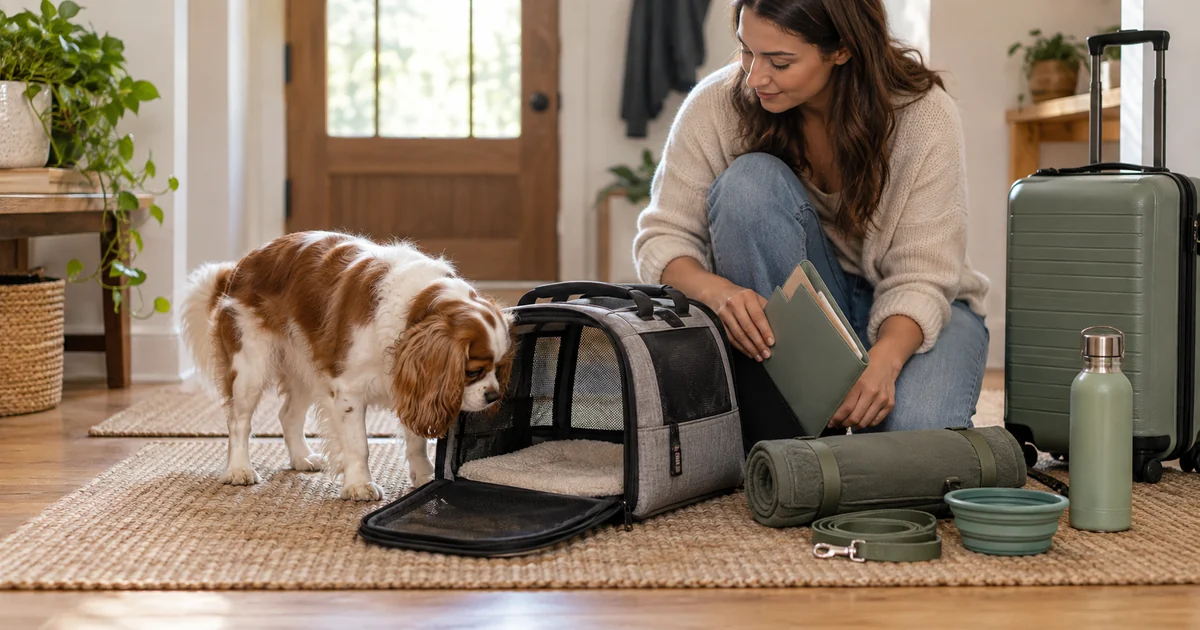
Pet travel runs on two clocks: the trip itself, which takes hours, and the preparation, which — done right — starts weeks earlier. Nearly every travel-day disaster (the refused boarding, the panicked cat, the carsick dog, the missing certificate) traces back to something that was skippable in week minus-four and unfixable at the gate.
Here’s the checklist on both clocks, for road and air.
Four Weeks Out: Paperwork and Prerequisites
Know your destination’s rules. Crossing borders with a pet is a bureaucratic event, and the requirements stack: an ISO microchip (implanted before the rabies shot, or the shot doesn’t count), a rabies vaccination that is both current and aged past a waiting period (commonly 21+ days), an official health certificate issued within a tight window before travel, and — for some destinations — specific parasite treatments or blood tests with lead times measured in months. Island and rabies-free destinations are strictest.
Even domestically: airlines want health certificates dated within ~10 days; hotels want vaccine proof; and your pet’s records should be reachable from your phone regardless — a digital vaccination record answers questions at check-in that a folder at home cannot.
Book the vet visit for the certificate window, and use the same appointment to discuss motion sickness or anxiety medication if past trips were rough — modern anti-nausea meds work far better than folk remedies, and nothing sedative should ever be given for air travel without explicit vet approval (sedation at altitude affects breathing and temperature regulation).
Confirm the carrier rules. Every airline has its own dimensions, and “airline-approved” on the label guarantees nothing. In-cabin: soft carrier fitting under the seat, booked early — cabin pet slots sell out. Cargo: airline-specific crate specs, seasonal temperature embargoes, and honest risk assessment for snub-nosed breeds (bulldogs, pugs, Persians), which most airlines restrict from cargo because their airways handle heat and stress poorly.
Two Weeks Out: Train the Carrier, Test the Ride
The single highest-ROI prep item costs nothing: make the carrier boring. Leave it open in the living room; feed meals inside it; toss treats in randomly. Two weeks of this converts the carrier from “vet trap” to “my den,” and a den-calm animal experiences a fundamentally different travel day than a trapped one. Cats especially.
For dogs and car trips, run graduated rehearsals: ten minutes around the block, then thirty, then an hour with a break stop. You’re testing for motion sickness (drooling, lip-licking, yawning are the early tells — log them and tell the vet) and building the association that car rides end somewhere good, not only at clinics.
The Go-Bag
Pack for the pet like you’d pack for a toddler:
- Food for the full trip plus 48 hours of delays, in the brand they already eat — a travel day is the worst day for a diet change
- Collapsible bowls; water from home for sensitive stomachs
- Medications in original packaging, plus the dosing schedule — cross-time-zone trips shift dose times, and a shared medication log keeps a two-adult trip from double-dosing
- Leash and a spare, harness, waste bags / portable litter box and familiar litter
- The scent anchor: their blanket or your worn t-shirt
- Documents: printed copies and phone access — certificate, vaccine record, chip number, a current photo (if the worst happens away from home, our lost pet playbook starts with that photo)
- Cleanup kit: paper towels, enzyme spray, spare bedding. Optimism is not a plan.
Travel Day: Car
- Restraint is non-negotiable: a crash-tested harness, a secured crate, or a barrier — an unrestrained pet is a projectile at 50 km/h and a bolt risk at every door opening. Cats: carrier, seatbelted, always. The front seat’s airbag zone is off-limits.
- Feed light, 3–4 hours before departure; water throughout.
- Breaks every 2–3 hours — leashed before the door opens; rest stops are the classic escape scene.
- Never alone in a parked car. Interior temperatures go lethal in minutes across most of the year, and windows-cracked is folklore, not physics.
Travel Day: Plane
- Exercise hard before the airport — a tired pet copes better.
- Line the carrier with an absorbent pad; tape a food packet and feeding note to the crate for cargo travel.
- In-cabin: the pet stays in the carrier, under the seat, the whole flight — this rule surprises exactly the people who didn’t do the two weeks of carrier training.
- On arrival, water first, familiar routine as fast as possible.
Arrival: Build the Embassy
In the hotel or rental, set up a mini home-base before anything else: their bed, bowls, litter or toilet spot, and the scent item, arranged in one corner. Keep feeding and walk times on home schedule — routine is portable and it’s the thing that tells your pet the world is still predictable. Log meals and behavior for the first day or two; travel stress occasionally masks real illness, and a note that says “ate half, hid all evening” beats a vague memory if a vet visit becomes necessary.
The Honest Decision
One last checklist item, rarely printed: should this pet make this trip? Elderly animals, anxious cats, snub-nosed breeds in summer, and short trips where the pet would spend most hours confined — sometimes the loving answer is a great sitter at home. Do the math per-pet, per-trip. When the answer is yes, the four-week checklist above turns travel from an ordeal into logistics — and pets who travel on logistics, not luck, become genuinely good at it.
Download PokiPaw to carry your pet’s documents, vaccine dates, chip number, and med schedule in your pocket — ready at every check-in, border, and front desk.
Ready to simplify your pet care?
Join thousands of pet owners using PokiPaw to track health, expenses, and daily routines.
Try PokiPaw Free